
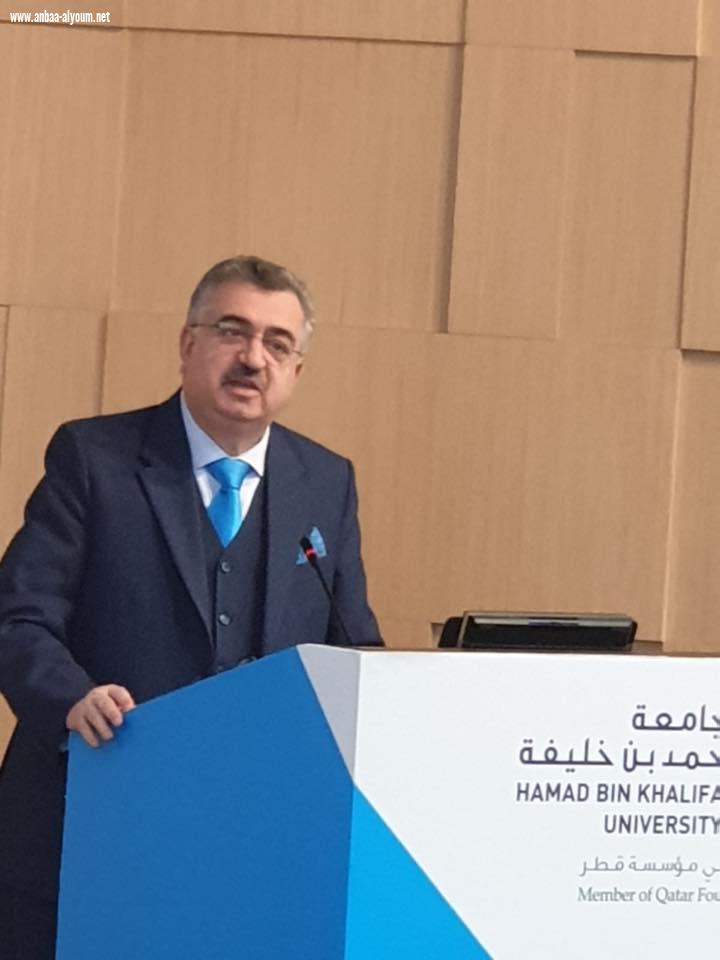
In the name of Allah, the merciful, the compassionate
Praise be to Allah, Lord of the worlds, prayers and peace be upon the Messenger of Allah and all the prophets and messengers, their families and their whole companions.
His Excellency, Chairman of the Board of Directors,
His Excellency, Prof. Dr. Ibrahim Bin Salih Al-Nuaimi,
The respectful masters of the symposium,
Excellencies and dignitaries,
Ladies and Gentlemen,
Peace, mercy and blessings of Allah be upon you,
It’s my honor to be one of the participants and speakers in this blessed symposium that is aimed to tackle one of the most important challenges in our societies. I would like to address the topic with two points:
1. General Principles of tolerance.
2. Tolerance in Iraq.
ONE: General Principles of tolerance
We desperately need to spread the concepts of tolerance and coexistence that our Islamic religion and all divine religions emphasized. This approach may give us the spirit of proper interaction in our societies and cuts the path in front of anyone who wants to distort the facts and calls for rivalries and conflicts in the name of religion.
Islam, which is the continuation and conclusion of the heavenly religions, came to organize our lives in this world in all respects. If we commit to that, our second lives also will be organized. Islam and the heavenly religions are the source of all virtues, good morals and schools of honesty, loyalty, chastity, integrity, justice and charity. There is a clear road map for dealing with everyone according to the correct rules fairly, as in the Quran Holy Verse: (and let not the hatred of a certain people prevent you from acting justly. Adhere to justice, for that is nearer to piety). According to the Holy Verse, we realize that justice is required with the opponents as well, so how will it be with relatives, citizens and fellows? We, as muslims, classify the people we deal with into categories. To deal with the muslims is organised by the Quran Holy Verse: (The beilivers are brothers). To deal with the people of the Scripture is organised by the Quran Holy Verse: (And do not argue with the People of the Scripture except in the best manner possible, except those who do wrong among them. And say, “We believe in what was revealed to us, and in what was revealed to you; and our God and your God is One; and to Him we are submissive). Also it came in another Verse: (And the food of those given the Scripture is lawful for you, and your food is lawful for them. So are chaste believing women, and chaste women from the people who were given the Scripture before you). To organise the relationship with the people of the Scrapture, according to the verse, in terms of food and tables comes in the sense of peaceful coexistence to its last limit, without accepting the controversy except with what is best, as it’s mentioned in the previous verse. We do not forget that marriage produces offspring and children from a father and mother from two different religions. The Holy Quran permits marriage, intermarriage, and offspring between the followers of different religions. What a greater relationship than that! Finally, I quote two Quran Verses that organise the relationship with people in general regardless their religion and color. The first: (As for those who have not fought against you for your religion, nor expelled you from your homes, God does not prohibit you from dealing with them kindly and equitably. God loves the equitable). Hence, we realize that the muslims are not only asked by the Holy Quran not to offend to non-Muslims, but also they are asked to deal with them kindly and equitably. The sencond Verse: (And if anyone of the polytheists asks you for protection, give him protection so that he may hear the Word of God; then escort him to his place of safety). It’s worth to mention that the Messenger Muhammad (ﷺ Peace be upon him) dealt with non-Muslims as peaceful citizens. We can realise this fact in the story of the Christians of Najran when they entered the Prophet’s Noble Mosque and practiced their rituals with full freedom and the Messenger of God (ﷺ Peace be upon him) looks at them. Another example is the treaty written under the name of the city’s nation to organise the relationship between Muslims and Jews. There are more proofs and examples in this respect.
Therefore, we must do our best to communicate the ideas of peace and peaceful coexistence to our societies without any hesitation, making public opinion in this way and block the way for advocates of militancy, extremism and terrorism in the name of religion because this contradicts the spirit of the heavenly religions. We quote a Quranic Verse and an Evangelical text to prove that they come from the same source, advocate virtues and the same ideas and meanings of tolerance and peace. Quran says: (Good and evil are not equal. Repel evil with good, and the person who was your enemy becomes like an intimate friend). This means that dealing with kindness to those who offended you is a virtue in the eyes of Islam. On the other hand, the Christians say in their Mass every Sunday in all their churches a great word that gives the same concept: (love your enemies). Hence, we need to develope these values between us for they create tolerance and peaceful coexistence in its finest form.
We need to provide our societies with all the benefits of science, progress, and services. We also need to maintain all rights based on citizenship and coexistence to prove that this is the truth of our religions.
In my speech, I deliberately presented a road map for interaction between Muslim- Muslim, Muslim- Biblical Muslim, Muslim- the general public on the basis of tolerance in order to pave progressively and show that our religion calls for peace and coexistence. We must produce a spirit of tolerance that helps to eliminate hatred and revenge and turns the values of amnesty and forgiveness as prominent human slogans. As a result, these accrue to individuals and societies with many benefits as they are a source of peace, security, safety, cooperation on goodness and competition in providing the best ideas, services. Such values are embodied in many of the noble Verses of the Holy Quran. For example: (And let them pardon, and let them overlook. Do you not love for God to pardon you? God is All-Forgiving, Most Merciful). Since tolerance is a waiver of rights, it is considered one of the best qualities and altruism. The greatest example of tolerence is when the Prophet of Islam (ﷺ Peace be upon him) has been subjected to of abuse, beatings and harm. However, he (ﷺ Peace be upon him) calls his God all good to them not against them when he says: (Oh God, forgive my people, they do not know).
Tolerance is a means to strengthen social ties, reject differences and the path of familiarity and affection. Religious tolerance helps to coexist between religions and help them dealing with common values. Among the requirements of preserving the human rights is the existence of ethnic tolerance that prevents racial discrimination based on color, race or others. Intellectual and cultural tolerance tackle the state of intolerance, improve constructive dialogue, peaceful coexistence, political tolerance, guaranteeing freedoms, accepting others and democratic practice.
The prophet Muhammad (ﷺ Peace be upon him) considers tolerence as the best act when he says: (The best morals of the people in this world and the hereafter are to visit who stopped to visit you, assist the one who denied to assist you and forgive those who wronged you). The speech embodies the Quran Verse: (and who restrain anger and who pardon the people, and Allah loves the doers of good). It’s worth to mention that the Verse doesn’t address the Muslims only but all of the people. Therefore, tolerence is deemed as one of the humanitarian and moral principals.
In a very important historical speech during the conquest of Mecca, after the Muslims were harmed, abandoned and wronged, when they returned to the honorable Makkah, they were powerful enough to return to their homeland, the Prophet Muhammad (ﷺ Peace be upon him) said His famous speech: (What do you think I am doing to you? They answered: you are a kind brither of ours and the son of a kind brother of ours. The Prophet said: then you are all free). This is absolutly tolerance, as many were still on their religion and polytheists. However, the doors of safety were opened to them with tolerance despite a long period of harm on their hands. Even more, the Prophet Muhammad (ﷺ Peace be upon him) gave to the worst enemies of Muslims at that time (Abu Sufyan) a big role when he said: (whoever entered the house –Kaaba- is safe, whoever entered the house of Abu Sufyan is safe, and whoever entered his house is safe). This is the summit of tolerance rather than mere tolerence. It’s the biggest challenge to the highest degree of tolerance.
Therefore, I must conclude the first point that it is not in the interest of Islam, Muslims and humanity to conceal these values and ignore them to show that the muslims as extremists, terrorists, killers, criminals and fanatics who are full of anger and hatred. Allah Almighty says to our Prophet Muhammad (ﷺ Peace be upon him): (And what We sent you is but mercy to the worlds). Tolerance is one of the most prominent features of mercy. In this respect, I would like to quote a couple of great speeches; the first is by Imam Ali bin Abi Talib (peace be upon him) when he sends Malik bin Ashtar, may Allah be pleased with him, to Egypt. Imam Ali advices Malik to behave well with the people saying: (People are of two classes either as your brother in religion or as a counterpart to you in creation). The second speech is by the caliph Al-Rashid al-Faruq Umar bin al-Khattab (may Allah be pleased with him) in his famous saying: (When did you enslave people while they were born free).
TWO: Tolerence in Iraq
There is no doubt that Iraq is a country of sprawling. It‘s multi-religious, multi-doctrinal and multi-nationalities. It is a country of history, civilizations and cultures. Therefore, it is not easy to evaluate tolerence in Iraq within minutes or lines. However, I do my best to give a picture of our reality in Iraq in respect to tolerence.
Iraqis lived on their land for thousands of years, coexisted with each other and were affected by each other's cultures. They have had various relationships including intermarriage. Therefore, they are well aware that they must choose the path of peaceful coexistence and tolerance. We do not deny that some factors (may be due to bad political practices) led to some kind of hostility and not accepting each other in contrast with olerance. For example, the battles that broke out between the Arabs and the Kurds in the past. There used to be exploitation of the feelings of the uneducated people to fall into the trap of outrageous sectarianism. We have emphasized in the first point the big role of building relationships between people. We started with the relationship of the Muslims with the Muslims. When perspectives are not the same with the various Islamic docterines, they must organise their differences with tolerence. The Quranic Verse: (The believers are brothers) is to be fully obeyed. They should accept each other and be able to find common ground among themselves. I am very much optimistic that when the Iraqi people will be left by hateful persons, the Iraqis will live with each other positively and accept each other with tolerence. This is the hope. Therefore, we must cut the way for all those who sow discord and hatred.
The Iraqis realize that diversity is not weakness but strength. The culture of tolerance and peaceful coexistence must be spread more and more. I am quite sure that sincere people do their best to achieve the goal.
Historically, since the establishment of Iraq, it has been inhabited by a diverse mixture of ethnicities, nationalities, religions and sects. This diversity stores many religious, ethnic and sectarian challenges and contradictions among the components of the Iraqi people whenever diversity has not used properly. Therefore, the best way to tackle the challenge and avoid expected conflicts in the countries that are characterized by multiple Ingredients, especially Iraq, is to make the right decision which is to invest the diversity in as best positive way as possible.
Religious, ethnic and national divisions of Iraq:
Since 1997, a comprehensive population census has not been conducted in Iraq, and there is no official statistic showing the size of Iraq consisting largely of Muslims (Sunnis and Shiites), and the rest of the remaining Christian, Yazidi, Sabean, and other smaller religions.
Iraq consists of two main nationalities, namely Arab and Kurdish. The Arabs are the majority of the Iraqi population. It also consists of other smaller nationalities such as Turkmen, Assyrians, and others. They can be estimated relatively as follows:
1. Arabs who make up about %75-80 of the Iraqi population.
2. Kurds who make up about %15-20.
3. Turkmen who make up about %2.
4. Christians, Arabs and non-Arabs, The Orthodox, the Chaldeans and the Assyrians, make up about %3.
5. The Sabean Mandaeans, Yazidis, Circassians, then Jews make up approximately 2%.
Despite this great diversity that characterizes Iraqi society, the recent history of Iraq has not witnessed major risks resulting in de-tolerance that could lead to sectarian or ethnic internal conflict. Also despite the policies that were previously adopted which deepened the division between Iraqi social components, for example, the bombing of Kurdish cities with weapons The chemical, which led to the martyrdom of thousands of innocent Kurdish citizens, as well as the repression and abuse of Iraqi cities in the south that led to the fall of innocent victims. However, such policies could not affect negatively the social and intellectual structure of the Iraqis. Through tolerance, the Iraqis have managed to overcome the challenge and work to establish a democratic system based on acceptance of the other, tolerance, respect for the human rights and safeguard the rights of minorities. After 2003, there used to be some negative cases and some voices were calling for deepening divisions, whether sectarian or national. Being tolerance rooted deeply in their culture, however, the Iraqis were able to overcome the challenges and go away from religious, sectarian and national fanaticism.
Iraq also went through a difficult and dark period recently when the terrorist organization ISIS controlled about a third of the Iraqi territories in 2014. ISIS brought ignorance, destruction, intolerance, extremism, intellectual and physical terrorism. This required priority for societal and psychological rehabilitation, which was considered one of the most important challenges in addition to the other security and military challenges that Iraq faced them. This required spreading the spirit of citizenship and dealing with everyone with equality and justice. The radical terrorist discourse adopted by ISIS including the wrong interpretation of the Holy Qur’an must be faced by religious scholars, the religious establishment, and jurists. This goal can be achieved through Intellectual dialogues, exchange of views and clarify the confusion of the texts of the Holy Quran and the Sunnah of the Prophet. This will lead to rebuilding the society according to a new format in the light of the new psychological, religious and educational process as the psychological and social aspects of the Iraqi society are basically characterized by the Islamic values including fraternity and acceptance of the other.
Therefore, the first step to build a culture of tolerance is to activate the role of civil society through education starting from kindergarten to universities the act that creates a fertile setting of harmony and collectivity. As a result, everybody realize the active role they play which restores the citizen’s self-confidence and his/her role and ability in the process of social and political change.
In the light of the above mentioned, the most important means to help to accelerate the culture of tolerance are:
1. Education which is an important factor for consolidating the culture of dialogue and tolerance. To activate the role of the civil society organizations is one of the most important requirements of proper formation of the citizen’s thoughts as change and transformation starts from within the human beliefs and translated into social changes.
2. Dissemination of the culture of tolerance in educational, public opinion-making and media curricula in a way that corresponds to the founding visions that purify the citizen’s awareness of the culture of tolerance and respect for the other. It’s also necessary to cooperate with the scientific research centers specialized people in social and psychological studies so that they can present their ideas and perceptions about rebuilding the Iraqi individual and society.
3. The role of the religious institution: the world needs a new strategic thought because it is fighting a new fierce war which is an extremist ideology that tries to emerge in a religious nature. We need a new intellectual restoration to be conducted by the religious institution in particular. In this respect, the religious institution in Iraq has done a successful role represented two levels of religious authorities in the holy Najaf as well as the Association of Muslim Scholars in Iraq in addition to the positive role of religious institutions for Christians, Sabeans and other religions. It came through awareness-raising religious speeches as well as fatwas that led to the cohesion of the Iraqi people to confronting terrorism intellectually and militarily. Therefore, to confront terrorism must be comprehensive, including military confrontation, on the basis of a comprehensive and integrated strategy.
Thank you very much..
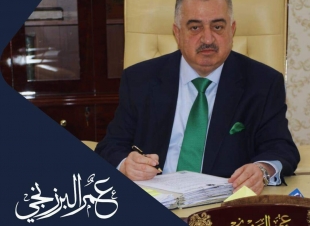
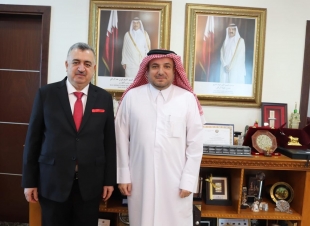
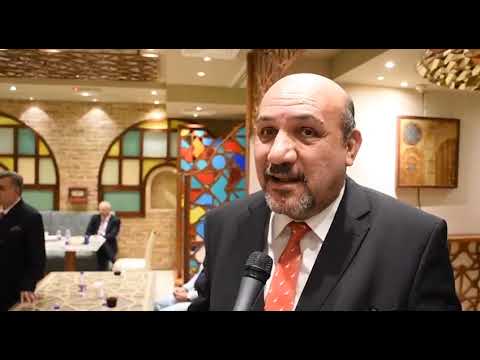
Omer Al-Berzinji
The Iraqi ambassador to Qatar
5 March 2020












 ">
"> ">
">